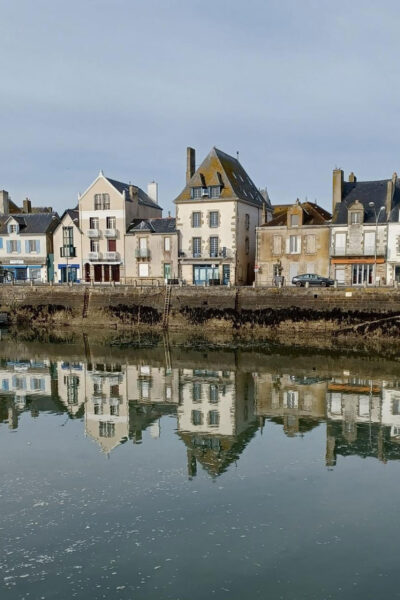
My first steps in Le Croisic
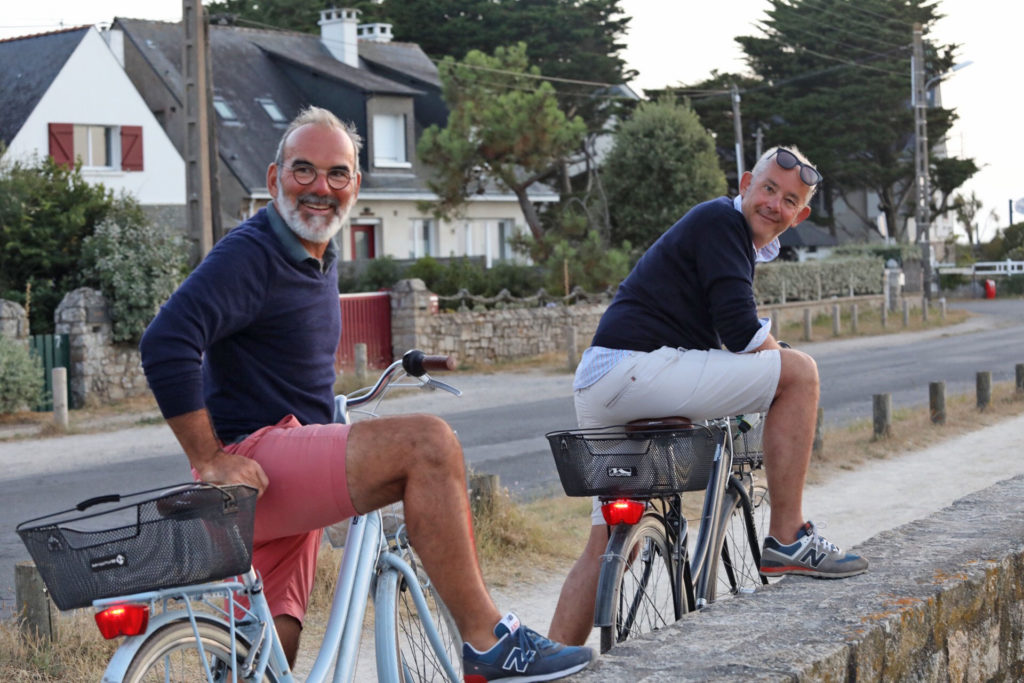
When you come to Le Croisic for the first time, it’s a good idea to take in the whole area, to get an overview of it, and to grasp this land wedged between ocean and marsh via its coastal path.
Since the 9th century, Le Croisic has no longer been an island, but a peninsula that can be explored on foot along the GR 34 coastal footpath, a 10 km iodized walk between the Atlantic Ocean, rocky outcrops, moors and the quays of the fishing port.
I invite you to start your walk from the TGV station that links Le Croisic to Paris Gare Montparnasse in 3h15, Le Croisic terminus, and has done so since the line was created in 1884!
From here, we head for the south coast of the peninsula, a wild coastline cut by cliffs that plunge into the ocean, home to many nesting seabirds.
The path winds its way up the cliffs, through the grasses and catkins that carpet the ground, offering fantastic views of the ocean.
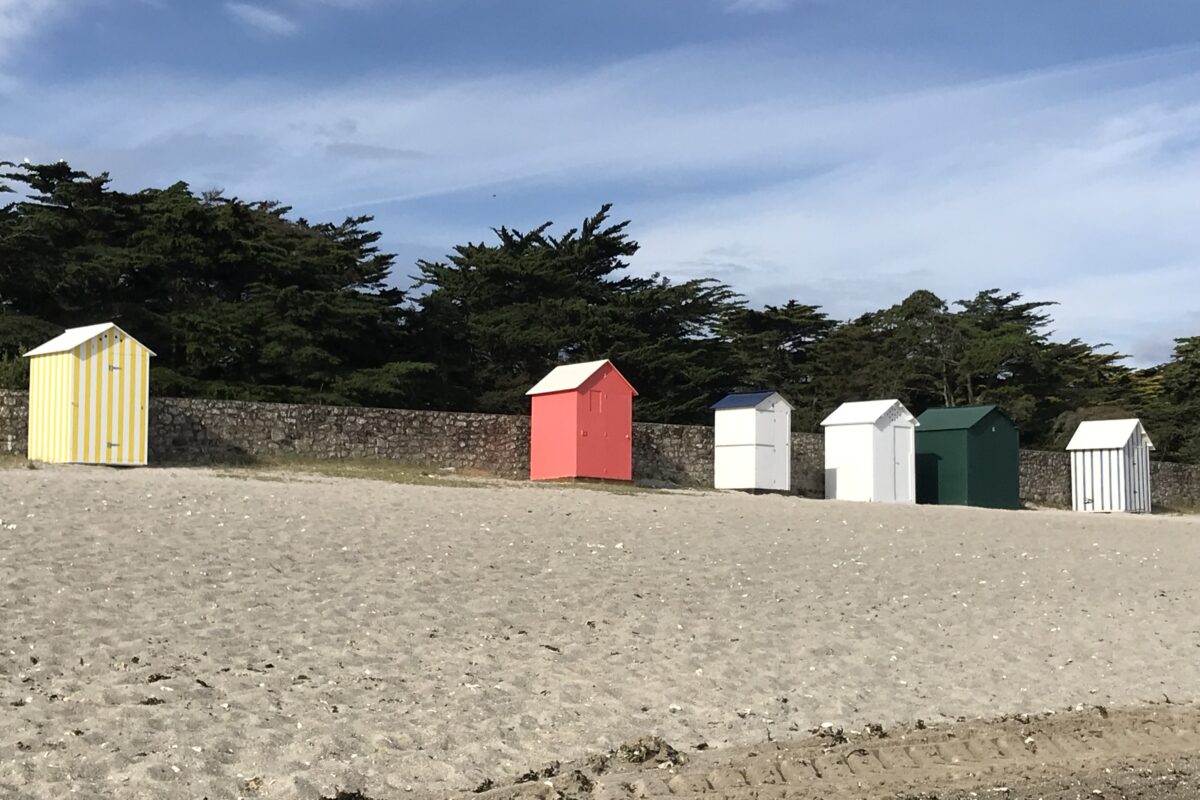
We pass Port Lin beach, a quiet area away from the town center, where some magnificent villas, including the villa du Lin with its columns, remind us of the early days of sea bathing in the late 19th century.
We pass by a mill, skirting the park of Pen Avel, a former holiday estate created in the 19th century and today covered with holm oaks and Mediterranean species, then the small beach of Les Sables Menus, renowned for its fine sand, and the menhir of La Pierre Longue, which stands at the top of a cliff overlooking the wide, flat surface of the Grand Autel rock, the site of possible ancient Celtic ceremonies.
Along the “sentier des douaniers”, we stop in front of an ancient watchtower, known as the “vigie romaine”, the highest point of the peninsula, 12 metres above the sea, a former 18th-century guardhouse.
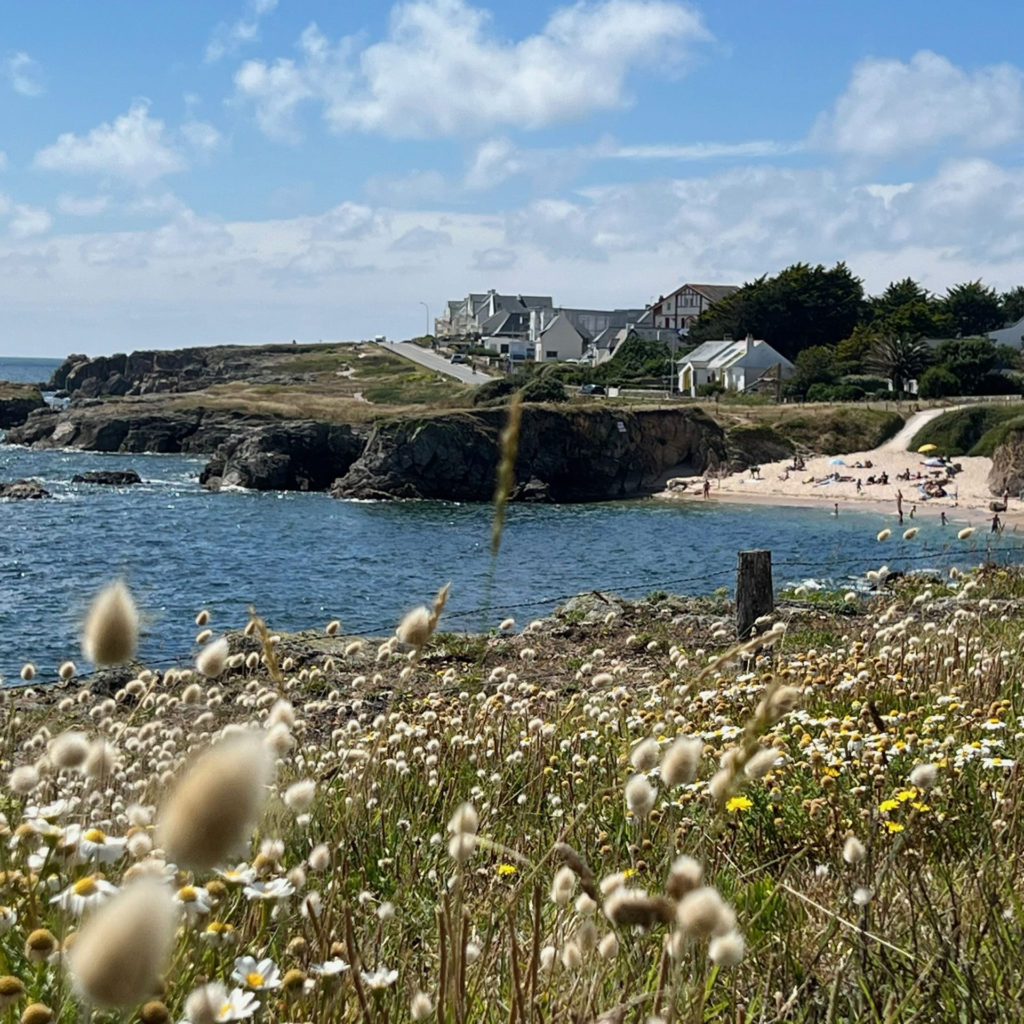
During the war, the Germans transformed it into a blockhouse equipped with radar. The building was destroyed and rebuilt in 1949 by the architect Chauvet. The view from here is breathtaking, and on a clear day you can see the islands of Houat, Hoedic and Belle Ile on the horizon.
Descending from our highest point, we skirt the famous Rocher de l’Ours, before reaching the Pointe du Croisic, halfway along the course. Here, a magnificent 9-hole golf course has taken up residence, and we swing and putt our way out to sea – a guaranteed spectacle!
Then the landscape becomes gentler, the cliffs replaced by rocky stretches punctuated by the sandy bays of Castouillet and Saint Goustan, which are a delight for shellfish and shrimp fishermen. Crowds flock during high tides!
Next to the beach at Saint Goustan is a unique site in France, a marine farm, Les Jardins de la Mer, where seaweed is harvested for fresh or processed consumption. I invite you to follow their fascinating harvesting and cooking workshops.
Saint Goustan beach is the gateway to the town of Le Croisic, with its fishing port and fish market.
We walk along the small beach, bordered by the 858-meter-long Tréhic jetty, built between 1839 and 1844, at the end of which dominates the 9-meter-high Tréhic lighthouse, built between 1869 and 1872 and electrified in 1950, which marks the entrance to the tract and access to the port of Le Croisic.
Le Croisic is a dynamic fishing port, renowned for its crustaceans, langoustines, shrimps and shellfish such as cockles.
There’s nothing like strolling along the quays when the trawlers return to port after several days’ fishing at sea and tie up at the docks to capture the atmosphere as the crates are unloaded.
The whole sea on one platform, from the top of a crane, crates overflowing with ice covering langoustines, soles spinning amid the waltz of handling carts! It’s a spectacle not to be missed!
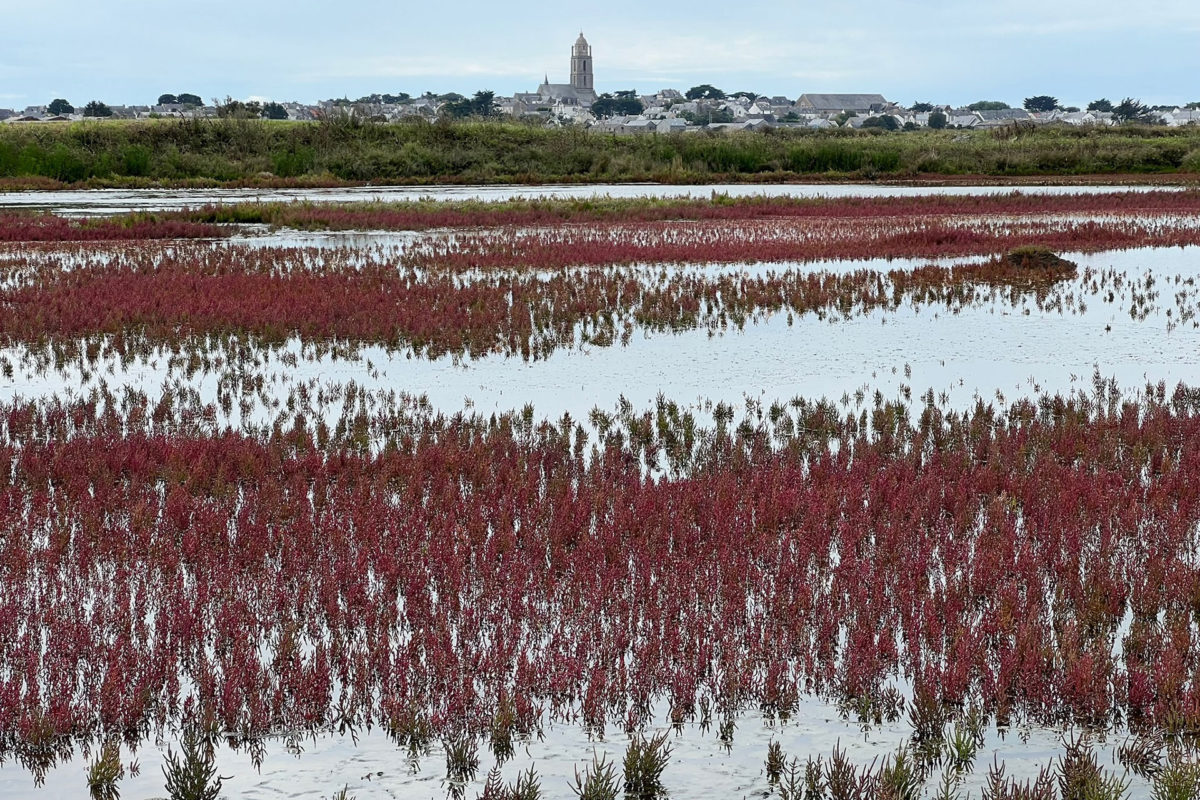
From the fish market, you have an extraordinary view of the whole port of Le Croisic, with its 16th-century architecture and shipowners’ houses. We climb to the top of Mont-Lénigo, which overlooks the harbor entrance, offering a fantastic view of the Croisic harbor and the Traict, the small inland sea that feeds the Guérande salt marshes and which, incidentally, inspired the name of your guest house, La Maison du Traict.
Our walk ends with a stroll through the streets of the historic town center, which has been classified as a “Petite Cité de Caractère”.
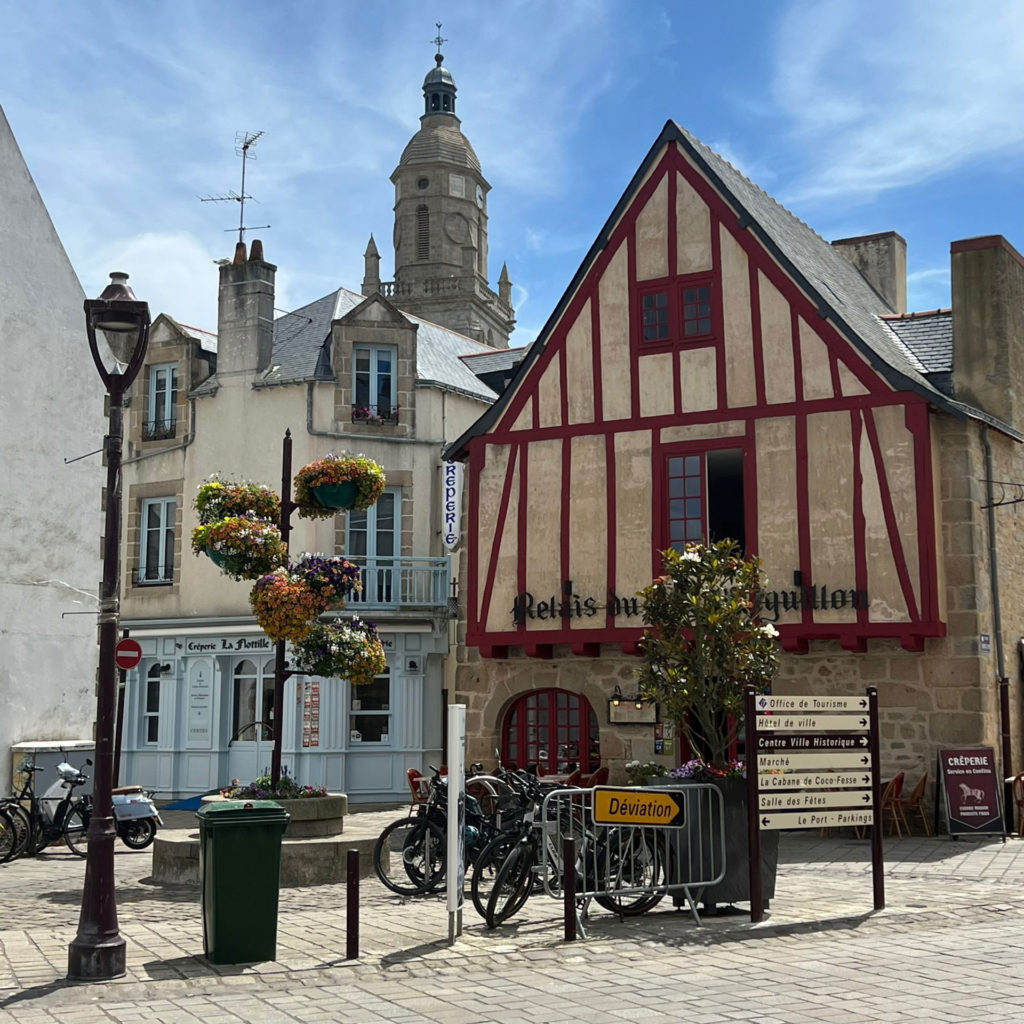
Leave the quays behind and wander down the narrow streets leading to the church, admiring the granite and timber-framed houses lining the cobbled streets.
If you’re lucky enough to be here on a Thursday or Saturday morning, make a detour to the covered market, a 1930s construction adjoining the garden of the Maison du Traict, which is very lively on market days, where you can meet local producers and take the pulse of the town.
Our hike to discover Le Croisic and its natural environment is drawing to a close, and after a leisurely 2.5-hour walk over a 10-km stretch, it’s time to take in the view once more, on the other mountain, Mont-Esprit, at the foot of the TGV station, and take in the breathtaking view of the entire peninsula and the port of Le Croisic.
These 2 mounts, Mont-Lénigo and Mont-Esprit, on either side of the port, are not natural. Each rises to a height of some 25 meters, and was built from the ballast of boats that, from the 16th century onwards, came from all over Europe to buy salt, and unloaded their ballast in exchange for salt and other goods.
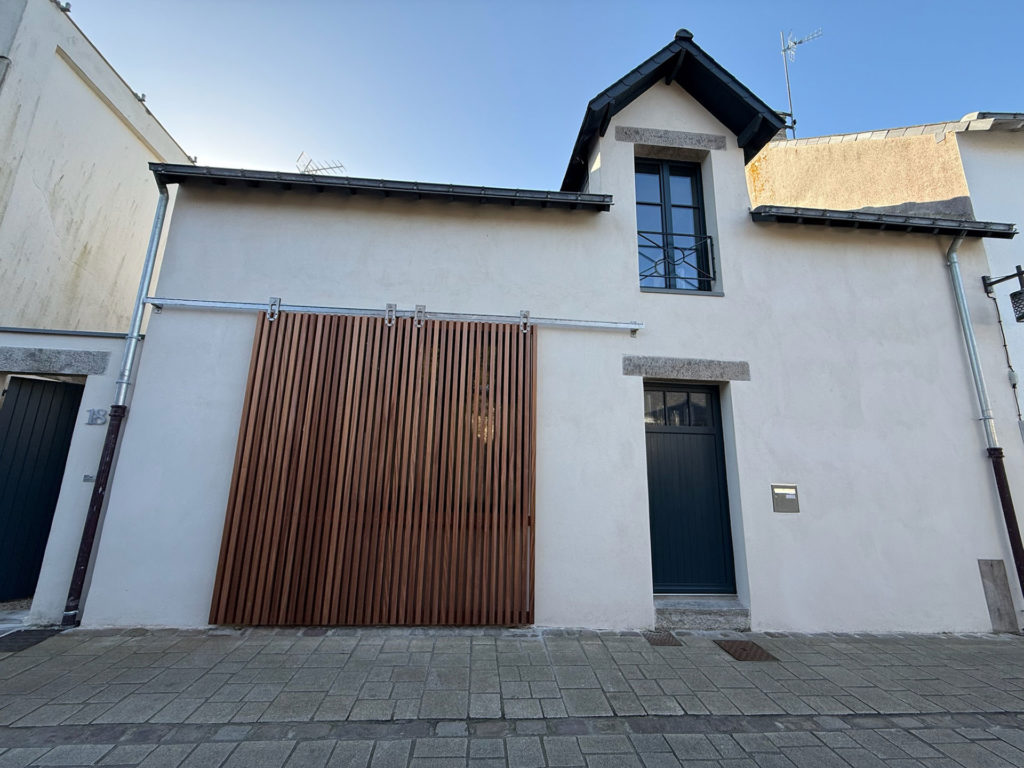
As a matter of fact, some of the stones used to make up the ballast of these ships from northern Europe in the 16th century were also used to build several houses and barns in Le Croisic, including the Maison du Traict.
During the renovation of our house, we noticed the presence of some stones from Northern Europe.
I hope I’ve inspired you to take a stroll around our peninsula and discover its unspoilt nature, remarkable architecture and strong identity.